|
|
 |
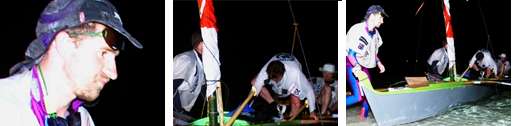
Less than 15 hours into the Eco-Challenge Sabah 2000 race, the tropical Bornean weather is already becoming a factor. But rather than suffering through sweltering heat and debilitating humidity, the competitors, now paddling native outrigger canoes, are facing a potentially long night in stormy seas.
While teams were fanning out over the first ocean sailing leg of the course, it was reported that a severe weather system was moving toward the area. By 6:02 p.m., 40-knot winds and one-to-two meter swells were being reported on the racecourse at sea.
The race radio airwaves began to heat up. Race Director Mark Burnett issued a warning, advising competitors not to continue paddling and sailing in the dark. He recommended that racers stop and sleep at the next PC (Passport Controls that are scattered across several small islands). Another race official announced, "Teams are being advised to stop."
Word spread of a team that was out of their boat and swimming in the wrong direction. "I want them out of the water," said another race official.
But the racecourse remained open and no official "dark zone" (when nighttime travel is prohibited) was imposed. Rather than heed Burnett's advice, competitors continued to press on in the pitch-black Bornean night. Team Vail/PacketVideo [go to Team Bio ], currently in the top 15, reached PC8 at 6:56 p.m. After being advised of the approaching weather system, they refused to stop.
The Malaysian government will not let rescue helicopters fly at night. As a result, night rescues on the ocean leg are an impossibility. "I told the teams at registration, we can not rescue you at night," said Dr. Netti Riggs, a medical center volunteer.
But seas subsided, and by 9:00 p.m. clear skies and calm waters were being reported on the course. Officials at race headquarters worked frantically to confirm earlier reports of an approaching tropical storm, but had no definitive forecast.
Meanwhile, Team AussieSpirit.com [go to Team Bio], anchored by world champion paddler Jane Hall, continued to lead the race.
After passing an eerie group of night fishing rigs between PC 9 and PC 10, the teams must carry their Perahu boats from PC 10 across a small sandbar. Then they will split up for the second time, with one pair of racers coasteering and swimming 1.5-kilometers up an inlet to Tabawan Island, where they will climb up and down a 700-foot mountain and regroup with the rest of their team � who have continued sailing � at PC 11.
The trip from PC 11 to PC 12 is the longest on the ocean leg, covering 24 kilometers. The lead teams are expected to reach PC 12, the beginning of the mountain bike leg, before daybreak on Tuesday � a full half-day before originally predicted.
That is, if the earlier weather reports prove incorrect.
Go to Race Information // Index
Go to Home Page
|
|